A Frequent Message

Last week I was dealing with the loss of my sister, but as I also followed the national news, it seemed as if the entire nation was either facing some form of grief or troubled by a personal disaster. The killings at Brown University were especially worrisome to me for a couple reasons. It clouded the memories of some of the happiest days of our marriage, which occurred in Rhode Island, and I have family living in the area.

My daughter told me that the high schools around the university, including my twin granddaughters’ school (which is about 2 miles from Brown), dismissed all extra-curricular activities. Even my one granddaughter’s Christmas concert was cancelled. I’m not usually a fearful person, but I found myself entertaining fearful thoughts, especially since the girls enter college in the fall. My mind seemed to spin with fearful possibilities.

Then when my son and I were talking about the killings, he said, “Mom, you need to be careful. You don’t know who you can trust these days.” I assured him that I was trying not to go to Walmart or the mall at night anymore, but his words of caution made me realize that even he, as a grown man, was expressing fear because of the senseless killings, robberies, and assaults. So how do we deal with fear when the world around us is dangerous? I think God’s Word has some good advice for all of us about handling fear.

The first message of Christmas from the angels was: “Don’t be afraid” (Luke 2:10). Before the angels declared the gospel—“The Savior has been born” (Luke 2:11)—the angels told the shepherds they were not to be afraid. Those men were not simply startled: the New Living Translation of Luke 2 says they were terrified (Luke 2:9). I’m sure my response would have been the same. Prior to the angels’ appearance, the only noise that night was the bleating of a lamb or two that had not fallen asleep. Of course, the shepherds were terrified.

Since the shepherds were familiar with the Old Testament prophecies of Isaiah, Jeremiah, and Daniel, they probably thought that a message from God meant impending judgment. But this was good news that will bring great joy to everyone (Luke 2:10).

Beginning in the first book of the Bible, the “do not be afraid” message is prevalent throughout God’s Word. God told Abraham, “Do not be afraid, Abram, for I will protect you, and your reward will be great” (Genesis 15:1).After the Israelites left Egypt, they realized the Red Sea was in front of them and the Egyptian army was closing in on them from behind. Fear gripped them. Then Moses, as God’s spokesman, said, “Don’t be afraid. Just stand still and watch the Lord rescue you today. The Egyptians you see today will never be seen again. The Lord himself will fight for you. Just stay calm” (Exodus 14:13,14, NLT).

God told other Old Testament personalities to not be afraid: Joshua (Joshua 1:1-9), David (Psalm 27:1 and 56:3-4, etc.), Solomon (I Chronicles 28:20), Jeremiah (Jeremiah 1:17), Daniel (Daniel 10:12 and 19). One of my favorite “do not fear” passages is Isaiah 41:10: “Don’t be afraid, for I am with you. Don’t be discouraged, for I am your God. I will strengthen you and help you. I will hold you up with my victorious right hand.”

Besides the angel’s message to Mary in Luke, the “do not fear” message is frequent in the New Testament: After giving the parable about the rich fool (Luke 12: 1-21), Jesus taught his disciples about money and worry. He said, “So don’t be afraid, little flock. For it gives your Father great happiness to give you the Kingdom” (Luke 12:32). When Jesus was preparing His disciples for his death, He said, “I am leaving you with a gift—peace of mind and heart. And the peace I give is a gift the world cannot give. So don’t be troubled or afraid” (John 14:27).

As recorded in the book of Acts, God told the apostle Paul several times not to worry. So, Paul gave us Philippians 4:6-7, “Don’t worry about anything; instead, pray about everything. Tell God what you need; and thank him for all he has done. Then you will experience God’s peace, which exceeds anything we can understand. His peace will guard your hearts and minds as you live in Christ Jesus.”

So, I (and you) have a choice in these difficult days to live in fear, which is torment (1 John 4:18, NKJV) or put our faith in God’s unshakable Word, pray about everything, and ask Him to give us His gift of peace. 

INCREASING VIOLENCE

We have been bombarded with reports of gross violence for many weeks. It seems that depraved people are finding more extreme ways nearly every day to destroy others’ lives. These disturbed people have little respect for human life and have given no thought to the consequences they and their families will suffer. Some people are saying they are experiencing emotional pain from the horrendous reports of violence.

After the shooting and fire at the church in Michigan, a friend texted me saying she is devastated with all the violence. (Her daughter had lived in the area and had known some of the people.) Another friend said, “Any of us could face death with all the violence going on.” I am baffled and wonder how and why people fall to such levels and resort to violence. I feel like Habakkuk of the Old Testament, “Wherever I look, I see destruction and violence. I am surrounded by people who love to argue and fight” (Habakkuk 1:3b, NLT).

While I’m not a psychologist, a statistician, or an authority on human behavior, it seems that violence is only increasing. Possibly we are only more aware of it. I cannot fathom how authorities on crime are saying that violent crime is decreasing. In a July 2025 study of crime in 30 cities, the Council on Criminal Justice reported a 17% decreased in homicides in the first six months of 2025. They also report that violent crime is lower than in 2019.  Also, the FBI reported a 4.5% decrease in national violent crime in 2024 as compared to 2023. These statistics just don’t seem possible to me.

I was very aware of crime as a child, but not violent crime. My parents had a business, and we suffered the consequences of gross thievery more than once. Twice my dad came close to bankruptcy because people who worked in the business stole from him.  The entire family suffered in various ways.

Dad had difficulty uncovering who was stealing from him, and firing the men brought other challenges. Of course, replacing the stolen inventory cost money. In one of the thievery instances, my mother, who had been a stay-at-home mom, had to begin working for Dad since he could not afford to hire a new office worker. To care for my 3-year-old sister, my grandmother moved in with our family. My sister and I who had shared a bedroom were moved to the basement. All of my siblings were affected by these changes and all agree that this was a difficult time for our family—a time that drastically changed our family dynamics.

Violence is as old as the human race. The first recorded sin after Adam and Eve left the Garden of Eden was a murder (Genesis 4). Cain thought that silencing his brother, Abel, would solve his problems. Instead, God held him accountable, saying he would be a “fugitive and a wanderer on earth” (Genesis 4:12). Cain would be alone and away from God’s presence for the rest of his life. He cried out, “My punishment is greater than I can bear” (Genesis 4:13). 

It was violence that caused God to destroy the earth with a flood (Genesis 6:11). In fact, we are told that the earth was filled with violence at that time. Many years later, the prophet Joel said the Egyptians would be judged because they committed violence against the people of Judah (Joel 3:19). About 100 years after Joel, Ezekiel told the people of Judah to “give up their violence and corruption” (Ezekiel 45:9). The Psalmist David says, “The Lord examines (tests) both the righteous and the wicked. He hates those who love violence” (Psalm 11:5). Those are very strong words that indicate that God will bring judgment on those who practice violence.

There is a way to avoid resorting to violence when we are wronged. Through accepting Jesus Christ as our Savior we can be free from the anger that leads to violence. Through Christ, we can be free of the desire to take revenge. Through Christ, we can have peace of mind and spirit, and we can even love and pray for our enemies as Christ taught us (Matthew 5:44).

May God give us the grace to humble ourselves and seek Him for answers in these troubled times. May we pray for an end to the violence that is seemingly all around us.

Differences

Differences

Spring has come to the Ozarks – at least in some ways. Today was moderately cold–31 degrees–and it only warmed to near 50. That’s quite a bit different from last week’s summer-like afternoon temperatures of 80 degrees. I love the spring and the new life it brings.

My daffodils (Narcissus) make me smile every time I look out the kitchen window. They are a beautiful part of God’s creation. I was surprised to learn a couple of weeks ago that because of cultivation and crossbreeding, there are now more than 26,000 varieties among the 36 species. A friend gave me a few bulbs about 20 years ago and now I have hundreds throughout my yard, since they multiply like rabbits.

Just this week I saw a beautiful photo (not the one I’ve included) of Icelandic horses. Not one of the entire herd was exactly the same. The variety made me think of how God has made all of us different.

As I think about the difference in God’s creation, I know He enjoys color and variety. Right now, my feeders are hosting eight cardinals. These beautiful red birds bring me joy. One lonely robin adds a splash of orange.

God is a God of variety in every way. Each of us has individual traits that no one else has. As human beings, we sometimes make the mistake of wanting people and situations to be similar. Do you remember your teenage years when conformity was expected? I’m glad those years are over. 

As widows, all our life stories are different, and each of us has processed through grief differently. I recently met a new widow who said she’s a private person and would not appreciate sharing about her life in a group setting. Other widows find great comfort in sharing with others. Crying for some brings relief from life’s stresses; others choose running, taking a walk, reading, or watching TV.

In Samuel 1, Hannah, who was not a widow but was extremely sad and depressed, wept intensely as she prayed. Her lips moved but no sound came from her mouth (I Samuel 1:13). It was so different from how most people prayed that Eli, the High Priest, thought she was drunk. I believe Eli knew very little about praying and even less about women. =) =)

It’s near the anniversary of my husband’s homegoing 28 years ago. Several weeks after his death when things settled down, I felt as if a big burden had lifted because he had been ill for many years and his care was becoming increasingly difficult. But after all these years, I still miss our conversations and the feeling of knowing that someone appreciated my coming home.

Your reaction to grief does not have to mirror that of your friend’s or anyone in your grief group. How you prioritize your time and energy into the healing process is of your choosing. Our most important pathway to healing comes through a vibrant relationship with a caring God and a friend or two who will put up with our idiosyncrasies.

In Times Like These

Today has been joyful and I even completed a few chores. I awakened to six inches of snow, which made everything especially beautiful. It’s also meant that the office where I work on Fridays is closed, so I’ve enjoyed a day getting things done in my home. With the help of a friend who knew how to remotely control my computer, my new printer is connected, and I can now receive and send emails again.

I trust you made it through all three holidays without any depression or a “woe is me” day or two. I made it through a Christmas dinner with tables of eight and an empty chair beside me and standing alone as the photographer snapped a picture. With three widows and a couple of husbands and wives at the table, someone would, of course, be next to an empty chair. This time it just happened to be me. It was a great night with good food and wonderful music, so I chose to concentrate on the privilege of being there.

I thought I had passed the season well for another year. But the last day of 2024 at the eye doctor’s office, I unexpectedly felt the sting of being alone. The waiting room was filled with husbands and wives interacting with each other. Most of the patients there expected their eyes to be dilated and would need help returning home. Although I wouldn’t need help, I had no one to talk with and felt alone sitting in the crowded waiting room. I was prepared for being alone at the special Christmas dinner and other seasonal activities, but this caught me off guard and left me with a bit of sadness for the rest of the day.

Sometime during the day, I was reminded of Hebrews 13:5: “…and be content with what you have, because God has said, ‘Never will I leave you; never will I forsake you.’”  Later, I also thought of the last words of Jesus before He was taken into heaven: “And surely, I am with you always, to the very end of the age” (Matthew 28:20).

Jesus’ last statement was meant to be a comfort to this group of early believers. They would never touch or see Him in this life again. They would never hear Him teach. They may have thought they would never see another miracle and that this phenomenal phase of their lives was over. They had no idea what their future lives would be like without Him. Who would lead them and provide for them? Who would tell them the right way to live?

Since these were normal people like you and me, I think these questions came to their minds. Jesus had told them He would send another Counselor—the Holy Spirit who would be with them always (John 14:16). But sometimes it’s hard to remember a promise when in a crisis.

This “always with you” promise is for us, as well as those early believers. It was the Holy Spirit that reminded me of Hebrews 13:5 that afternoon when I felt so alone. As 21st Century believers, we may not be able to physically see and touch the Lord, but we can sense His presence with us as we are reminded of His promises. In our times of aloneness, we can be assured that He will “never leave us nor forsake us.”

Not Just Halloween

Today is not just Halloween. October 31st is a significant day on the church calendar since it’s considered the beginning of the Protestant Reformation. On October 31, 1517, Martin Luther, a German Augustinian monk, posted his Ninety-five Theses on the Castle Church door in Wittenberg, Germany. At the time, he was a young professor of moral theology at the university in Wittenberg and had been teaching New Testament doctrine. He discovered that the apostle Paul taught that salvation does not come through good works but only through faith in Christ alone (John 14:6; Acts 4:12; Galatians 2:16; Ephesians 2:8-9). This revolutionized his thinking.

Luther had no intentions of leaving the Roman Catholic Church or starting a new religious order. He simply wanted to academically discuss the 95 statements and questions that arose as he studied Scripture and compared the teachings of the Catholic Church with the Bible. He especially emphasized the Bible as the sole authority for doctrine and conduct and taught against the Church’s practice of papal indulgences. Within four years he was labeled a heretic.

The Protestant Reformation, which emphasized the five solas, is an outgrowth of his studies. The Ninety-five Theses were written in Latin, but his teachings were translated into German and spread because of the development of the printing press. Luther had also been instrumental in translating the Bible into German which was also printed, so people were reading the Scriptures for themselves. 

          The five solas are five Latin statements that developed from this conflict and which became the core beliefs of the Protestant Reformation.

  • Sola gratia: Salvation is a gift from God, not human merit 
  • Sola fide: Salvation is through faith in Jesus Christ alone 
  • Sola Christus: Salvation is in Christ alone 
  • Sola Scriptura: The Bible is the only authority for Christians in faith, doctrine, and practice 
  • Sola Deo gloria: Salvation is a work of God for His glory 

In 1521, Luther refused to recant his teachings at the Diet of Worms, an imperial council of the Church and was excommunicated from the Roman Catholic Church. Since the Church required celibacy for their priests, Luther was not married when he was a professor in Wittenberg. Four years later after his excommunication, he helped Katharina von Bora escape from her nunnery. They married and had six children. Luther said, “There is no more lovely, friendly, and charming relationship, communion or company than a good marriage.”

As Luther’s teachings spread, other reformers joined the movement. John Calvin and Huldrych Zwingli taught in Switzerland and John Knox ministered in Scotland. They taught the importance of individual salvation, which was through God’s grace and accomplished at the death and resurrection of Christ. They emphasized that papal declarations were not as significant as Scripture and that a person could not buy eternal life through giving money to the Church. Through Luther and those who followed his teachings, Europe was changed, the authority of the Church declined, the Bible was translated into various languages, literacy flourished, and the ideas of individual freedoms rose to prominence.

In writing about Luther, Aaron Armstrong, who also produced a film on Luther, reported that despite the man’s great influence and esteem, he was far from perfect. He noted that Luther was belligerent, divisive, had a temper, and became angry quickly. Others report that he was harsh with his wife and children.

In his later years, Luther, much to peoples’ shock, turned against the Jews and advocated the burning of their homes, schools, and synagogues. His writings on marriage also did not reflect his earlier sentiments. He seemed to indicate that marriage was only to escape the sin of adultery. Armstrong sums up his article on Luther by saying, [Luther was] “a normal, frail, fallen, sinful human being who was used extraordinarily by a gracious God.

As Armstrong notes, Luther was “a giant” in world history and was greatly used by God to change the trajectory of a major portion of the Christian Church. But, as all of us, he was flawed. Everyone on earth is a frail and sinful human being, but through faith in Christ (sola fide), we can have God’s gift of eternal life and be used by Him to help others find the saving faith in Christ alone.

Remembering 9-11

As I write this, we, as a nation, are remembering the loss of nearly 3,000 people on September 11, 2001. In the years that have followed, many others (first responders and even survivors) have died with cancer and lung diseases from the ingested ashes. The heroism of those trying to save people led to their own death.

Possibly you remember where you were 23 years ago and what you were doing when someone told you that the Towers were hit. I was at work, and we were attending our weekly chapel service when a man interrupted to tell us the tragic news. We returned to our offices, but none of us worked on our “to do” lists for the next few hours before we were sent home. We intently watched the TV and radio coverage wondering if more destruction would follow. As I drove home that day, I vividly remember how blue and clear the sky was. It seemed very unlike how I felt.

The skyline of New York was forever changed, and I, like many others, realized for the first time that others wanted to destroy our beloved nation. As a Christian with a missionary heart, this was difficult for me to believe. We had helped so many others to relieve their suffering and assisted in peoples’ struggle for freedom. How could this happen? I had always believed that we were honorable in most of our international relationships. Why were we so hated?

Although we were far from perfect, we didn’t take one inch of land after World Wars I and II. In fact, we helped to rebuild Japan and Europe. Through the Marshall Plan we provided substantial economic aid to Europe. And we did not punish Japan for their attacks on us; we rebuilt their infrastructure and economy. Today, Germany and Japan are our allies.

Amid all the carnage of September 11, we began to hear testimonies of escape: people whose cars failed that morning so they couldn’t go to work at the Towers, and others who woke up sick and couldn’t go to work. We rejoiced in these accounts of God’s protection, but wondered why were some spared and others died?

I wondered, God, why did you allow this to happen? Why did some die while others escape? Why weren’t the terrorists caught before they caused this mass destruction? How could we have prevented this? Why would anyone want to kill others and themselves in the process?  

I had no answers. Some people said September 11 happened to bring us to our knees in repentance and worship. We were certainly a sinful nation in many ways and changes needed to be made. While we will never know the exact reason, we know that God allows suffering, and we have a choice when faced with such a dilemma. For several weeks after the tragedy, people flocked to churches, and there seemed to be a genuine spirit of repentance. But it didn’t last.

As widows, we suffer. We go through the same stages of grief that the 9/11 families experienced. In difficult times, we have two choices: suffering either takes us closer to God or further away from Him. I know people who become very angry with God during illness. They view their pain and loss as anger from a vengeful God. They are convinced that God has forsaken them, that their life is no longer valuable, and that the God of this universe cares nothing about those who are hurting. I believe that God is especially close during times of deep suffering.

Nearly 70 percent of the Psalms addresses suffering (laments), written when David was in the depths of despair. For instance, Psalm 3 was written when David was fleeing from his son who was trying to seize the government. David pleaded for God to deliver him in Psalms 4 and 5. In Psalm 7, David says, “[S]ave and deliver me from all who pursue me, or they will tear me like a lion and rip me to pieces with no one to rescue me.” In each of the lament Psalms, David acknowledged his pain and suffering, but he also confirms God’s faithfulness and praises Him. After pleading for relief in Psalm 4, David ends with, “I will lie down and sleep in peace, for you alone, O Lord, make me dwell in safety” (v. 8).

The pain that we as widows experience can be almost impossible to bear. How are we going to financially survive? When will we ever be able to sleep normally again? What is this emptiness I feel? Will it ever go away? Will our friends still include me? How can I finish the projects we started? Do I move? Do I look for a different, better-paying job? The questions are endless.

In every problem, we can look to Scripture. Psalm 46:1-2 says, “God is our refuge and strength, and ever-present help in trouble. Therefore, we will not fear.” Psalm 34:4 says, “I sought the Lord, and he answered me; he delivered me from all my fears.” Trusting the Lord when the walls are caving in is not an easy process. As you wait for God to solve those big problems, praise Him for those daily, even small, answers to prayer.

An Encouraging Word

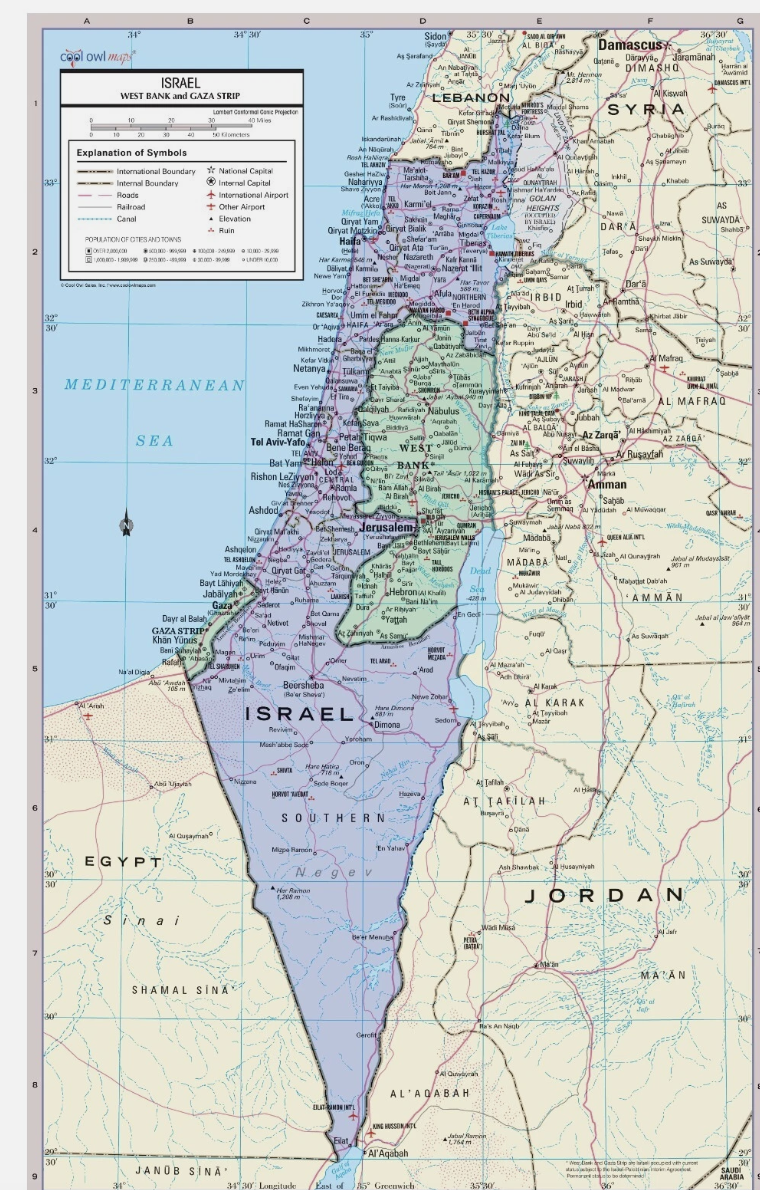
The last several weeks have been a roller coaster of events that have shaken our nation. Recent fires at large churches in Dallas and Houston seem to be a bit suspicious. Saturday, July 13, was the attempted assassination of Donald Trump. President Biden is no longer running for a second term as president and Democrats have chosen the vice president as their new candidate. Christianity was mocked during the opening ceremony of the Olympics. A Hezbollah/Iranian rocket killed 12 children and injured many others in a Druze village in northern Israel. Now that Israel has responded by killing two Hezbollah’s leaders, Iran has vowed to respond with swift and devastating punishment. Our nation also is experiencing tornados, flooding, and wide-spread, devastating wildfires.

The uncertainty of our world and impending darkness in every realm of our society have caused some people to say they sense heaviness, stress, anxiety and even depression. In a recent video interview, a licensed counselor quoted from a survey conducted by the American Psychiatric Association. She said, “73% of people visiting a counselor are reporting anxiety and stress from the current election cycle.” I must admit that I’ve been troubled by all the news and have experienced anxious thoughts. This has been compounded by serious family illnesses.

As in the past, God has used old hymns to encourage me. I have not thought of He Giveth More Grace by Annie Johnson Flint for many years, but the words (below) came to me as if we had sung the song last Sunday in church.

Annie Johnson Flint (1866 – 1932) spent most of her adult life in a wheelchair and in great pain from crippling arthritis. Annie was greatly loved by her parents, but because of the death of her mother (when Annie was just three years old) and her father’s illness, she and her sister were adopted by the Flints. Despite all the hardships, she was a happy child and eventually became a schoolteacher.

At the beginning of her second year of teaching the arthritis limited her ability to walk, so she resigned. This brought financial hardships (These were eased somewhat after her poems were published.) Her sister’s health also deteriorated. Despite her increasing struggles, her faith remained strong. Her wirings, however, admitted to a quick temper, impatience, and strong sensitivities when wronged by others, so she acknowledged her human shortcomings. Her life verse became 2 Corinthians 12:9: “My grace is sufficient for you, for my power is made perfect in weakness. Therefore I will boast all the more gladly of my weakness, so that the power of Christ may rest upon me.”

Possibly Annie’s life and poems speak so powerfully to me because 2 Corinthians 12:9 was the Scripture the Lord gave me when my husband was so very ill. Just as the Lord has encouraged me in the past and during these difficult days, He can do the same for you. Maybe He will uplift you through a Scripture, a song, or an encouraging word from a friend. May Annie’s poem put to music by Nick Aufankamp speak words of comfort to you today.

He giveth more grace when the burdens grow greater,
He sendeth more strength when the labors increase;
To added afflictions He addeth His mercy,
To multiplied trials, His multiplied peace.

When we have exhausted our store of endurance,
When our strength has failed ere the day is half done,
When we reach the end of our hoarded resources
Our Father’s full giving is only begun.

Fear not that your need shall exceed His provision,
Our God ever yearns His resources to share;
Lean hard on the arm everlasting, availing;
The Father, both you and your load will upbear.

His love has no limits, His grace has no measure,
His power no boundary known unto men;
For out of His infinite riches in Jesus
He giveth, and giveth, and giveth again.

Summer Joys

Summer is here, and almost everyone is complaining about the blazing hot temperatures. The actual temperature on this Monday afternoon is 96 degrees, but with the humidity, the “feel like” temperature is more than 100. So, there may be something to complain about. Forecasters are labeling it “dangerous,” so we do need to be cautious.  I, however, complain about winter’s cold temperatures, not the heat. So, as the saying goes, you can’t please all the people all of the time.

I welcome spring with open arms, and summer is my time to be outside in the garden and yard while especially enjoying my flowers. There’s always something good to report, some part of God’s creation to amaze me, and something to make me smile.

A friend posted this on her FB page yesterday: “Gardening has a way of seeping into your soul, and one day you find yourself, in the words of poet Mary Sarton in Plant Dreaming Deep, spending the first half hour of the morning ‘enjoying the air and watching for miracles.’”

Of course, negatives occur, but it’s counterproductive to concentrate on those. This weekend, I realized I’m going to have a bumper crop of green beans and cucumbers but discovered that a critter ate the tops of all my beets and the tender shoots of my broccoli.  When I was preparing my raised beds to plant vegetables this spring, I found four newborn bunnies hiding in the weeds, so I assume they enjoyed my small, growing vegetables. My Stella D’Oro lilies and irises were more beautiful than ever this year, but I have not one fig growing on my fig tree. So, disappointments and triumphs co-exist.

Gardening is like life itself. As widows we have experienced both the highs and lows of living. And we have learned to concentrate on the positive. It’s not beneficial for us or anyone around us to wallow in our losses or concentrate on what could or should have been. In her book, Lonliness, Elizabeth Elliot, challenges us as widows to accept this new stage of life as a gift. (She was widowed twice.) It’s a challenging assignment, and I’m not sure I’ve arrived at this lofty conclusion yet.

For me, gardening eases life’s lonely moments. As perennials begin to sprout, they speak to me of hope for the future and remind me of God’s great Resurrection when all things will be made new. I get so excited when the daffodils poke through the cold dirt that I call my sisters, daughter, and friends to announce my discovery. I know that soon my back yard will be full of color.

And, just like life, a garden is always changing. The beautiful blooms and leaves wither and die, but that nourishes next year’s growth. Maybe this is why Elliot said we are to receive widowhood as a gift. One part of our life has died, but we should allow the lessons we learned and the joys we shared to nourish our future.

In 597 BCE, the Israelites were exiled to Babylon because of their gross sin and idolatry. Life for the Jews was not easy. They lost everything; heartache surrounded them. But Jeremiah gave the exiles a wonderful promise that every widow can claim today: “For I know the plans I have for you, declares the Lord, plans to prosper you and not to harm you, plans to give you hope and a future” (Jeremiah 29:11).

As you enjoy this summer’s beauty, remember God’s promise to Israel and rejoice in the future He has planned for you.

Passover

This year the Jewish people began celebrating Passover April 22 (Monday evening) with a Seder meal, which is the most important event of the eight-day celebration. During the evening, they light the menorah, eat a meal of lamb, unleavened bread, and bitter herbs, and recounted the event that led to their deliverance from Egypt under Moses.

The Book of Exodus gives the entire story, beginning with the oppression of the Israelites, the birth of Moses, and his exile to the wilderness of Midian. After serving his father-in-law as a shepherd for 40 years, God called Moses at the age of 80 to lead the people out of slavery. Moses reluctantly accepted the responsibility. Moses and his brother, Aaron, met with Pharaoh to request their exodus. When Pharaoh refused to let the children of Israel go,10 plagues followed.

God prepared the Israelites for the last plague (the plague on the firstborn). They were to kill a lamb and put the blood of a lamb on the doorposts of their houses. When the death angel would “pass over” the home and see the blood, the firstborn in that house would not be killed. Exodus 12:30 says, “There was not a house in Egypt without someone dead.” No one, however, in the houses of the Israelites died. That night, more than 600,000 people walked out of Egypt to freedom.

God then commanded the people to celebrate this deliverance every year.

From that day (sometime in the early 1400s B.C.) until now, Jews have celebrated Passover every spring to commemorate their great deliverance. Regardless of where the Jews have lived or how they have been oppressed, they celebrated Passover.

Since I love to cook and experiment with recipes from other cultures, I thought you’d enjoy a recipe for matzah ball soup, which is generally one of the meals served during the last two days of Passover (Yom Tov). https://toriavey.com/perfect-chicken-soup/

Before Solomon built the temple, the people gathered as families to kill a lamb and eat unleavened bread and bitter herbs. After the temple was built the lamb was killed and the celebration was held in Jerusalem. This is why the Jews say “next year in Jerusalem” at the end of each Seder meal.

We may not be Jews, but we have a direct connection to Passover because Jesus died during Passover and became our Passover Lamb. Through the shedding of His blood, we have salvation and freedom from the slavery of sin.

Choices for 2024

Two years ago, I started planning to refurbish my 20-year-old kitchen and two bathrooms. I visited websites and stores, talked to numerous people, including contractors and others who had attempted such projects, and compared prices, colors, and hardware. It took months of investigation to decide what would look best and what was within my budget. I knew I could do some of the work myself but would need to hire a contractor for the more complicated parts of the project.

In choosing a countertop for my cabinets, I soon learned that the granite I wanted was more expensive than I anticipated. So, I started looking in a different direction. I priced other stone and non-stone products, but I kept returning to the granite. I wanted the light-colored granite, but the dark cost less per foot, so I chose a beautiful black with specks. My counters are lovely, but they are darker than what I wanted. In retrospect, I wish I had not settled for second best. It took four very strong men to install the countertop, so replacing it would be expensive and complicated, not at all like repainting a wall. If a friend were coming to me for advice on kitchen renewal, I would tell my friend to wait a year, save more money, and then purchase your first choice. 

We have many choices that we will make in 2024. Some of them will be more significant than choosing wall or cabinet colors. (I have two friends who have decided to get married, and another has decided to move. These are life-changing choices.) Other choices will have little significance. Some choices will require a daily commitment of time and energy. Possibly you, like me, would like to read God’s Word through again this year. This means a daily practice of setting aside time to read the Bible. I would like to be better committed to my health. To do this, I must set aside time each day to walk or exercise.

The apostle Paul gives us insightful instructions about making choices for the future: “But one thing I do Forgetting what is behind and straining toward what is ahead, I press on toward the goal to win the prize for which God has called me heavenward in Christ Jesus (Philippians 3:13-14). Some of last year’s choices may have caused problems for you and others, but God asks us to repent and look forward, not dwell in the past. Last year could have been the best year of your life, but still our instructions are to forget what happened in the past and look forward to the future.

God has a new plan for each of us in 2024, and He has also promised to help us with each choice. He does not leave us floundering in indecision. Nearly 3,000 years ago, Solomon wrote these words of wisdom: “Trust in the Lord with all your heart and lean not on your own understanding; in all your ways, acknowledge him and he will make your paths straight (Proverbs 3:5-6). May our choices in this new year be in line with His will and His ways.