All the Christmas decorations are in their boxes and stored, waiting December 2021. But this past year was so challenging, demoralizing, emotional, and devastating that it’s hard to think and plan for another year or even think about the possibility of Christmas 2021. As we remember all of the earthshaking events of 2020, it’s hard to believe we made it through such a cataclysmic year. A friend texted this to me a couple of days ago: “The only thing I believe anymore is God’s Word.”

With the pandemic and political unrest, there seems to be a dark cloud over everything right now. Maybe it’s just me, but there’s seemingly nothing to be excited about for the new year. While listening to music over the weekend, I heard an old gospel song: “Hold to God’s Unchanging Hand,” which was written by Jennie Wilson as a poem and sent to Franklin L. Eiland to add the music. Miss Wilson was an invalid, but her poems reflect joy and a dependence on God. The song is an admonition and challenge to us in these uncertain times.
Time is filled with swift transition, Naught of earth unmoved can stand;
Build your hopes on things eternal; Hold to God’s unchanging hand!
CHORUS: Hold to God’s unchanging hand! Hold to God’s unchanging hand!
Build your hope on things eternal; Hold to God’s unchanging hand.
Trust in Him who will not leave you whatsoever years may bring;
If by earthly friends forsaken, Still more closely to Him cling!
Covet not this world’s vain riches that so rapidly decay;
Seek to gain the heavenly treasures; They will never pass away!
When your journey is completed, If to God you have been true,
Fair and bright the home in glory, Your enraptured soul will view!
This song and others on trusting the Lord bring back memories of sitting next to my grandmother in church as we sang from our “song book,” as we called it. Look at all the great theology and biblical truths that I learned as a child:
- Nothing in this earth is permanent. (Matthew 24:35)
- God never changes. (Malachi 3:6; Hebrews 13:8; James 1:17)
- Eternal things are the most important. (Matthew 6:33; Matthew 7:24-27)
- Riches are fleeting. (Matthew 6:19-21)
- This life will end. (Ecclesiastes 3:1-2; 2 Corinthians 4:16-18)
- Obedience to God is necessary to gain a home in heaven. (2 Timothy 4:6-8; John 3:16)
We live in very troubled times, but the year (1906) when “Hold to God’s Unchanging Hand” was published was equally problematic. It started out badly with a January 8 landslide in Haverstraw, NY, that killed 21 people. Then on April 18, 1906, a 7.9 earthquake nearly leveled the San Francisco area. More than 3,000 people died directly or indirectly (from the fires) and as many as 300,000 people were left homeless since more than half of the buildings in the area were destroyed by the earthquake or fires. In today’s money, the damage would equal $120 billion.
While a listing of 1906 events includes a prominent murder and racial tensions, it also notes that on April 14 (4 days before the earthquake) William J. Seymour held the first service in the African Methodist Episcopal Church in Los Angles, which would become known as the Azusa Street Revival. The 3-year revival spread throughout the world and was the beginning of the Pentecostal movement. People’s lives were changed; race and gender walls crumbled, and miracles occurred. Referring to the death of Christ, Seymour said, “The color line was washed away in the blood.”
We live in a broken world, but as we “hold to God’s unhanging hand,” live according to His Word, and pray fervently, I believe we will see another great move of God that will break barriers and change lives.
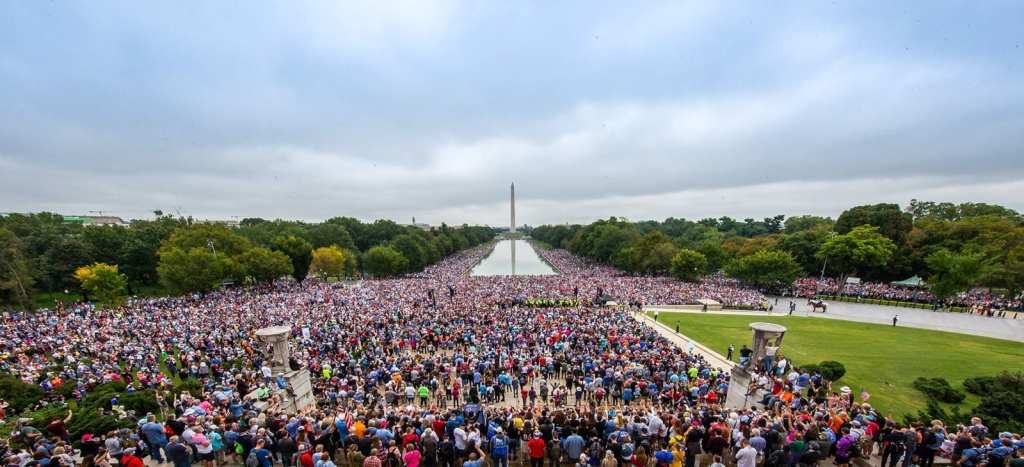


 Republican candidates. The Great Depression that had begun in 1929 was beginning to ease and the nation was recovering in small ways, but most Americans were struggling, and 14% of the population was still unemployed. People needed encouragement and hope for a better future, but they also wanted relief from government overreach.
 Only ONE has never broken a promise—our precious heavenly Father. He always keeps His promises. As we deal with news of the increase of COVID-19, riots in our streets, a growing crime problem, and economic difficulties, we may have a tendency to worry about the future and become overwhelmed with fear. Instead of being anxious and afraid, we can rest on God’s promise to
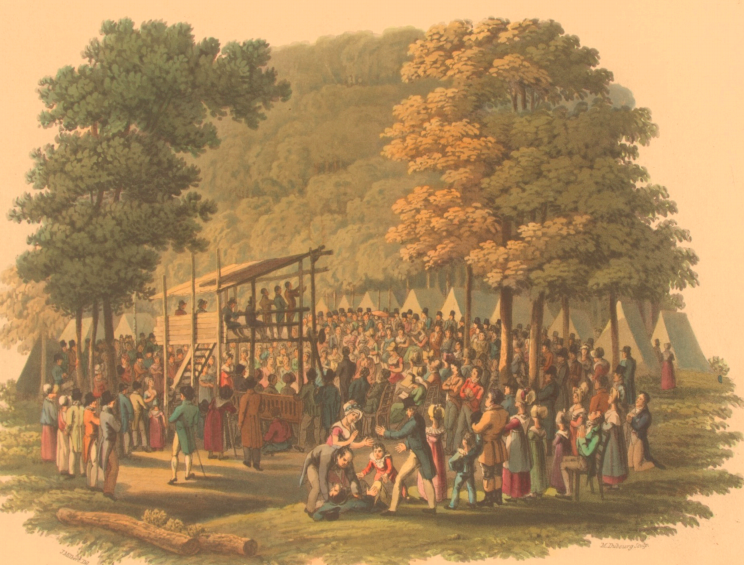 not be called a camp meeting for about three years.) People earnestly sought God and cried out for mercy. When McGready held another camp meeting a month later, the crowd swelled to about 8,000. “McGready recalled: The power of God seemed to shake the whole assembly…Here awakening and converting work was to be found in every part of the multitude.”
 Presence of the Lord.” (My eyes are filled with tears as I write this.) To my left were the beautiful Gingerbread Houses, as they came to be known, and in front of me was a large pavilion. I knew I was on hallowed ground. Something spiritually wonderful had taken place here. I learned this was the 34-acre Wesleyan Grove, established in 1835, where as many as 20,000 people gathered each summer for spiritual renewal. I was sensing the remnants of the Second Great Awakening.
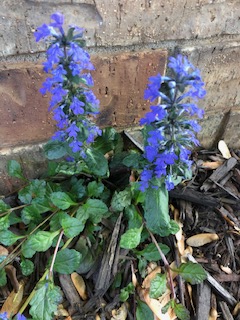 How surprised I was this spring to see an ajuga plant poking through the mulch. I was even more surprised about a month later to see its stately bloom. What I assumed was absolutely dead had somehow come to life. I thought about the spiritual implications. Seeds of kindness and goodwill may not take root and bloom soon after they are planted. I also thought of the seeds of the gospel of Christ that we plant in people’s lives that may seem totally dormant for many years.
 on the left and crowded in the left aisle and front. The small balcony was packed with men and women sitting and standing together. Even the pianist and pastor on the small platform had very little room. Worshippers crowded outside around the open windows on both sides and in the street in front of the church.
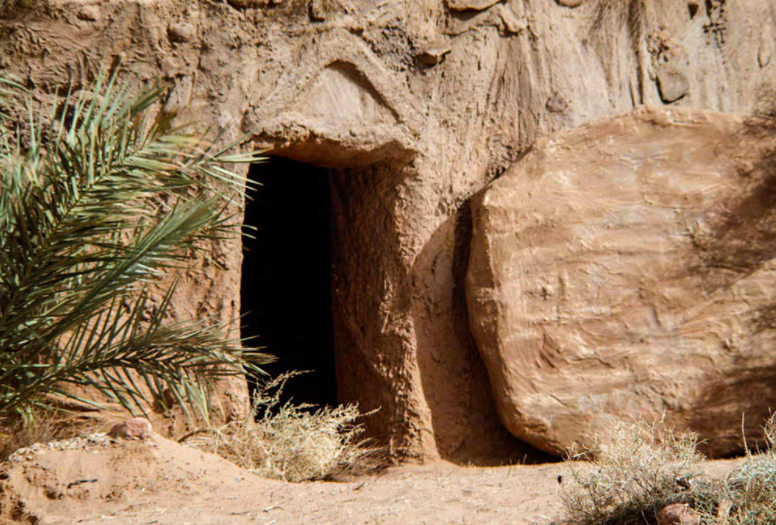 and are celebrating the resurrection of Christ in our homes because of COVID-19, may we be grateful for the privileges we have to worship in freedom. May this time of prayer and praise alone remind us that many believers around the world meet in small groups weekly to avoid identity and prosecution. Our Easter celebration may be vastly different this year, but we can still joyfully celebrate our risen Lord.
 alcohol consumption and lack of exercise.” Alarming!
 Set aside time for Sabboth rest.
 walkingforward