Everything around us is changing.

Spring is such a beautiful time of the year. My redbud trees were in their glory for several weeks, the hyacinths’ fragrance and beauty brought joy even on cloudy days. The tulips bloomed just in time to add extra beauty to Easter. Despite these special blessings, I’m feeling a heaviness from the sadness, confusion, and darkness in our world. A friend mentioned the other day that 8 or 9 families connected with our church have experienced loss in the past few weeks, and within the past several weeks, I’ve attended five funerals or visitations. Only one was COVID related.
We have repented and prayed for God to intervene in our nation’s problems, but things are seemingly getting worse. We have interceded for some of our friends who have been ill, but they are now with the Lord. Many are saying, Why hasn’t God answered our prayers? I’m sure we could make some guesses, but we don’t know why. We have very few answers. Possibly you prayed for months, even years, for God to heal your husband, but it didn’t happen. And you’ve had other requests, but the heavens seem brass. What do you do when God is silent?
I know a person who feels that God is too busy to answer her requests. Another person told me that God’s silence proves He doesn’t exist. In Psalm 13, the Psalmist David said that God had forgotten him and hidden His face from him. Some would call this a spiritual drought, or the dark night of the soul, or spiritual desolation.
David was sure at this time in his life that his enemies were going to win. But in verses 5 and 6, David reaffirms his faith: “But I will trust in your unfailing love; my heart rejoices in your salvation. I will sing to the Lord for he has been good to me.” David knew that God had always been with him in the past and that God would continue to be with him. So, he was determined to continue to trust. So, our first defense when life is difficult is to continue to trust God’s love and faithfulness.
It is reported that Yogi Berra said, “It ain’t over till it’s over.” Of course, as a famous baseball coach, he was referring to baseball. But it’s true in life, so giving up should not be an option. We must pray until we see an answer. In the Sermon on the Mount (Matthew 5 – 7), Jesus said, “Ask and it will be given to you; seek and you will find; knock and the door will be opened to you. For everyone who ask receives; he who seeks finds; and to him who knocks, the door will be opened.” The tense of the Greek words for ask, seek and knock refers to a continual action— keep on asking, keep on seeking, keep on knocking.
Luke 1:18 says, “Jesus told his disciples a parable to show them that they should always pray and not give up.” A widow constantly went to a judge “who didn’t fear God or care about people,” (v. 2) but because she continued to ask for justice, he finally granted it. Then Jesus said, “And will not God bring about justice for his chosen ones, who cry out to him day and night?” Be assured God has not left you alone in your struggles.
1 Peter 3:12 says, “For the eyes of the Lord are on the righteous and his ears are open to their prayers.” (See also 1 John 5:14, 15) According to John in Revelation 5:8, God keeps our prayers as incense in golden bowls. God is hearing your cries. When we feel God is silent, we should keep on asking Him for our deepest needs and trust in His constant care.



 Republican candidates. The Great Depression that had begun in 1929 was beginning to ease and the nation was recovering in small ways, but most Americans were struggling, and 14% of the population was still unemployed. People needed encouragement and hope for a better future, but they also wanted relief from government overreach.
 Only ONE has never broken a promise—our precious heavenly Father. He always keeps His promises. As we deal with news of the increase of COVID-19, riots in our streets, a growing crime problem, and economic difficulties, we may have a tendency to worry about the future and become overwhelmed with fear. Instead of being anxious and afraid, we can rest on God’s promise to
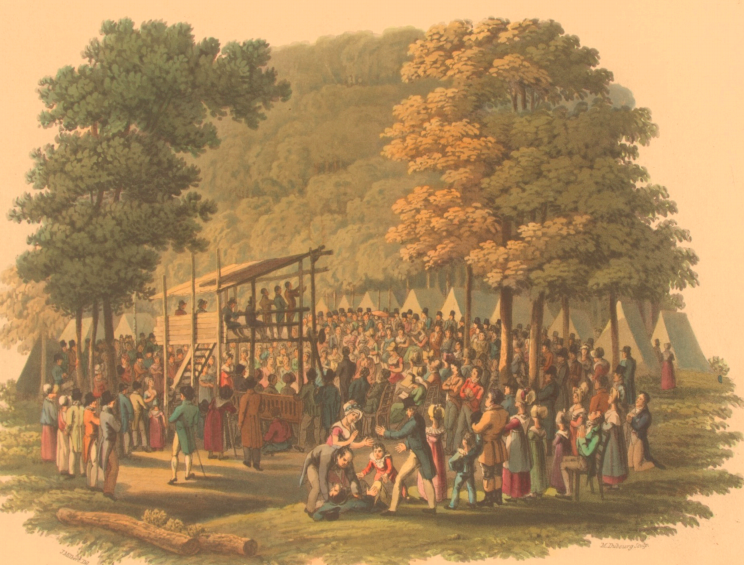 not be called a camp meeting for about three years.) People earnestly sought God and cried out for mercy. When McGready held another camp meeting a month later, the crowd swelled to about 8,000. “McGready recalled: The power of God seemed to shake the whole assembly…Here awakening and converting work was to be found in every part of the multitude.”
 Presence of the Lord.” (My eyes are filled with tears as I write this.) To my left were the beautiful Gingerbread Houses, as they came to be known, and in front of me was a large pavilion. I knew I was on hallowed ground. Something spiritually wonderful had taken place here. I learned this was the 34-acre Wesleyan Grove, established in 1835, where as many as 20,000 people gathered each summer for spiritual renewal. I was sensing the remnants of the Second Great Awakening.
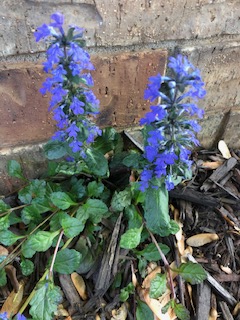 How surprised I was this spring to see an ajuga plant poking through the mulch. I was even more surprised about a month later to see its stately bloom. What I assumed was absolutely dead had somehow come to life. I thought about the spiritual implications. Seeds of kindness and goodwill may not take root and bloom soon after they are planted. I also thought of the seeds of the gospel of Christ that we plant in people’s lives that may seem totally dormant for many years.
